Phleam - Powering the Future of Trust in African Finance
Client
Phleam
Year
2024
Scope of Work
When it comes to money in Africa, trust isn’t just a nice-to-have, it’s everything. That’s where Phleam comes in. Built for a fast-changing financial landscape, Phleam is more than just a platform - it’s a bold step toward making digital finance safer, smarter, and more inclusive. Whether it’s helping fintechs verify identities or making cross-border transactions feel local, Phleam is quietly rewriting how trust works behind the scenes.
I beleieved myself and the cross-functional team approached this mission with one goal: to turn complex financial infrastructure into intuitive, human-centered experiences. From crafting seamless onboarding flows to designing dashboards that feel empowering, we focused on removing friction while reinforcing reliability. Because in a world where finance moves fast, Phleam is building the trust that helps people, and businesses - move even faster.
To comply with my confidentiality agreement I have omitted and appropriated confidential information. These designs are a reinterpretation of the original


Trust Isn’t a Feature - It’s the Currency
In the African financial landscape, trust isn't an added value. it's the foundation everything else stands on. In Nigeria’s informal economy, where side hustles and mobile transactions shape daily life, trust is how deals get made, reputations grow, and livelihoods stabilize. Phleam emerged not as another digital wallet, but as a platform quietly rebuilding the infrastructure of financial trust, piece by piece, user by user.
I joined this mission as Lead Product Designer, working with a nimble, cross-disciplinary team of fintech engineers, a UI/UX designer, and grassroots community managers. Together, our goal was to humanize financial infrastructure - to design systems that didn’t just function well, but felt familiar, transparent, and empowering. Because in an economy powered by hustle, the real currency is belief; in systems, in people, in possibility.
The Hustler Economy, Up Close
To design trust, we had to understand where it breaks. We began by narrowing in on one of Nigeria’s most vibrant informal communities: student entrepreneurs on Lagos campuses. These are digital natives running reselling businesses, importing thrift items, and operating link-in-bio shops - all without the backing of a bank or formal business structure.
What we found wasn’t surprising, but it was telling. Transactions lived in DMs. Receipts were screenshots. And when a deal went wrong, there was no recourse, only lost money and lost reputation. Every successful transaction depended on social proof: referrals, WhatsApp groups, and verbal promises. “I want my customers to trust me,” one vendor told us, “even when we don’t meet face-to-face.”
This insight reframed the problem: these users didn’t just need a wallet. They needed a system where trust was visible, earned, and transferable - where every transaction could carry reputation forward.

Building with Intention - Not Just Another Wallet App
Our mission wasn’t to build another finance app with sleek UI and standard features. It was to create a platform where people could earn, save, and grow their reputation - without needing a traditional bank account or high digital literacy. That meant every design decision had to do more than look good, it had to earn trust, reduce friction, and reflect how money actually moves on the street.
Since the product centered on trust, earning, and community - not just transactions, We structured the product around three key pillars:
Smart Wallet: Escrow was the default, not the exception. Trust badges were earned via verified, dispute-free transactions.
Digital Storefront: A low-bandwidth, link-in-bio shop anyone could launch, complete with reviews and public trust scores.
Group Wallets: Inspired by local ‘ajo’ savings groups — with transparent ledgers, role-based permissions, and payout histories.
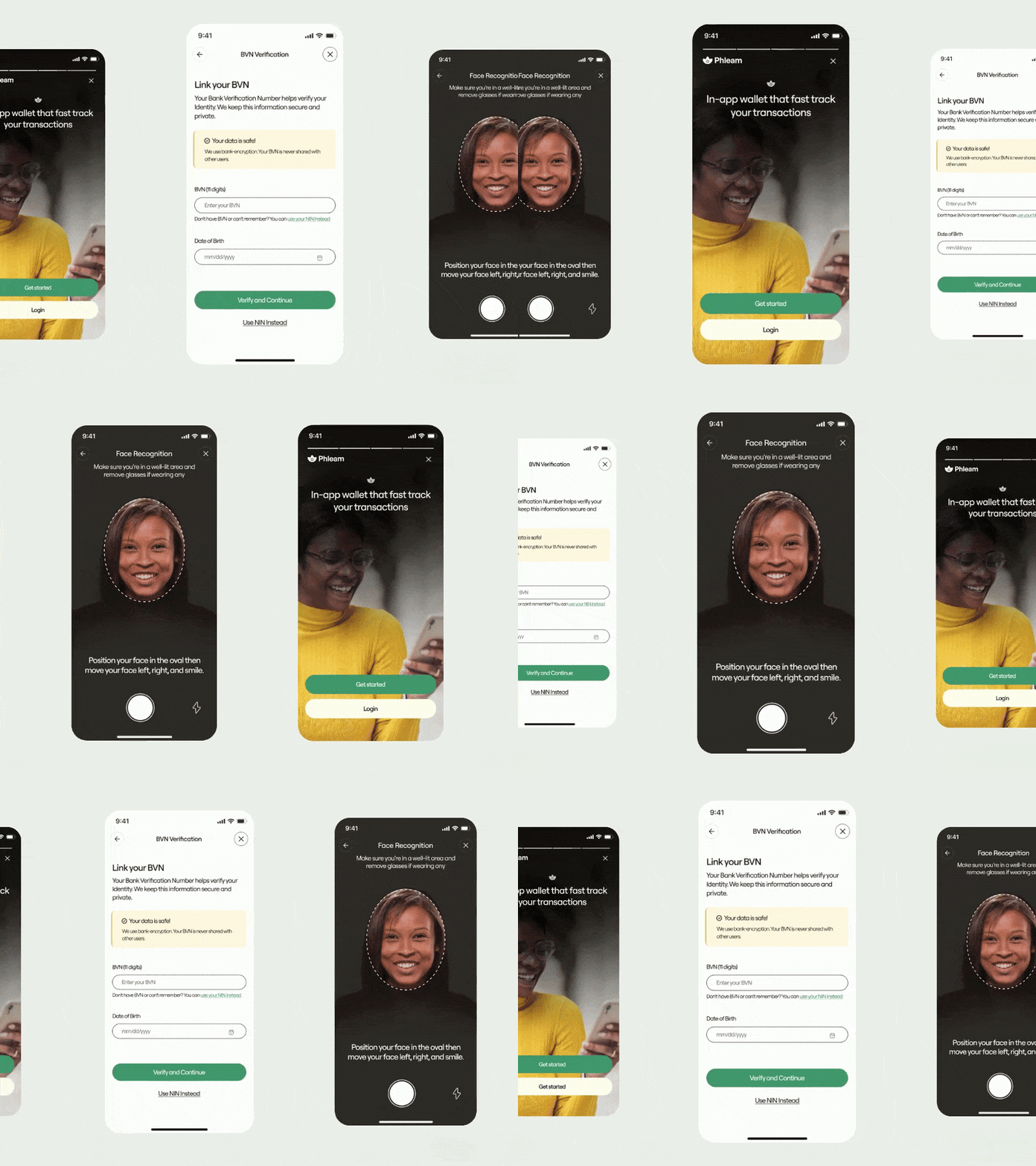

Designing Trust into Onboarding
Traditional fintech onboarding often feels cold, overly technical, or inaccessible - especially to users with limited digital literacy. We made the first experience on Phleam radically different.
We embedded:
Face Verification that felt human, not invasive.
BVN Linking with plain-language guidance.
Social Referrals tied directly to transaction-based growth, not gamified fluff.
Micro-Influencer Endorsements and visual trust loops to show progress in real-time.
We A/B tested multiple onboarding flows and found that a mix of social proof + small wins during onboarding significantly improved both completion and confidence.
Designing for the Edges (and the Tradeoffs)
One of our toughest challenges was balancing security vs. simplicity. Many users had smartphones, but not the digital literacy to navigate conventional fintech design. And yet, trust required robust verification.
We faced several key edge cases and designed for them:
Unbanked Users - Offered alternate paths using NIN instead of BVN for verification.
Failed Face Verifications - Built retry flows with lighting and camera guidance.
Limited Literacy - Prioritized iconography, action-based copy, and structured visual hierarchy.
Trust Disputes - Designed a transparent, multi-path resolution flow with options for mediation or community escalation.
Rather than hide the complexity, we made it navigable. These tradeoffs were debated heavily during design-engineering sprints - but testing always brought us back to clarity and confidence as the north stars.

Validation, Metrics, and Market Signals
From wireframes to pilot rollout, we ran weekly usability testing and in-field validation with our pilot users. Within the first six weeks, the MVP demonstrated clear traction:
75% of pilot users completed full onboarding, including identity verification.
3× growth in escrow transaction volume within the first month.
+15% retention at day 30 compared to regional fintech benchmarks.
Referral rate became the primary growth driver, validating our trust loop model.
Savings groups reported faster member payouts and fewer disputes.
Qualitative feedback was equally encouraging. Vendors reported feeling more “professional,” while buyers said they trusted transactions more once they saw escrow was in place.
The Craft and the Team
I led the end-to-end product design, from initial research and journey mapping through interaction design, prototyping, testing, and final handoff. I built a mobile-first design system optimized for low-bandwidth conditions and designed UI patterns to visually cue trust without clutter or complexity.
Collaboration was tight and iterative - engineers were involved in early concepting, and community leaders gave weekly feedback that shaped everything from copy to flow logic. We worked in 1-week sprints, testing almost every interaction in the field before scaling.


Before Phleam/After Phleam
Before:
Users transacted via DMs, managed savings in WhatsApp groups, and had no way to prove or grow digital trust.
After:
Users launched verified storefronts, built portable trust profiles, used escrow by default, and joined transparent savings cycles.
This wasn’t just about design - it was a behavior shift.
What I Learned
Building for trust meant facing hard design questions: How much friction is too much? What happens when verification fails? Can UX design replace a handshake?
The answer was never in the features alone. It was in understanding how offline behaviors could inform online trust and translating that into a digital experience that felt both empowering and familiar.
Phleam reminded me that designing for underserved users isn’t about simplifying everything. It’s about simplifying the right things - and being honest about what must remain complex, while guiding users through it with empathy, clarity, and context.
What's Next? - Scaling Trust Like Infrastructure
Phleam wasn’t built just for student vendors or campus hustlers. That was only the starting point. The real goal is to make trust something you can carry with you, no matter where you’re transacting or who you’re dealing with.
Long-term, this isn’t just a product. It’s infrastructure-quiet, reliable, and always working in the background. Picture a future where:
Your trust score moves with you, from selling clothes on Instagram to landing freelance gigs or using other fintech tools.
Startups can plug into Phleam, and instantly access features like escrow, KYC, and dispute resolution without rebuilding from scratch.
Verification is based on real activity, not just paperwork, with credibility rooted in your transaction history and community backing.
We’re not trying to replace banks. We’re stepping in where they’ve been absent-building tools that match how people here actually move money and build relationships.
Because when trust becomes something you don’t have to prove every single time, people can spend less time defending their legitimacy and more time growing what matters.