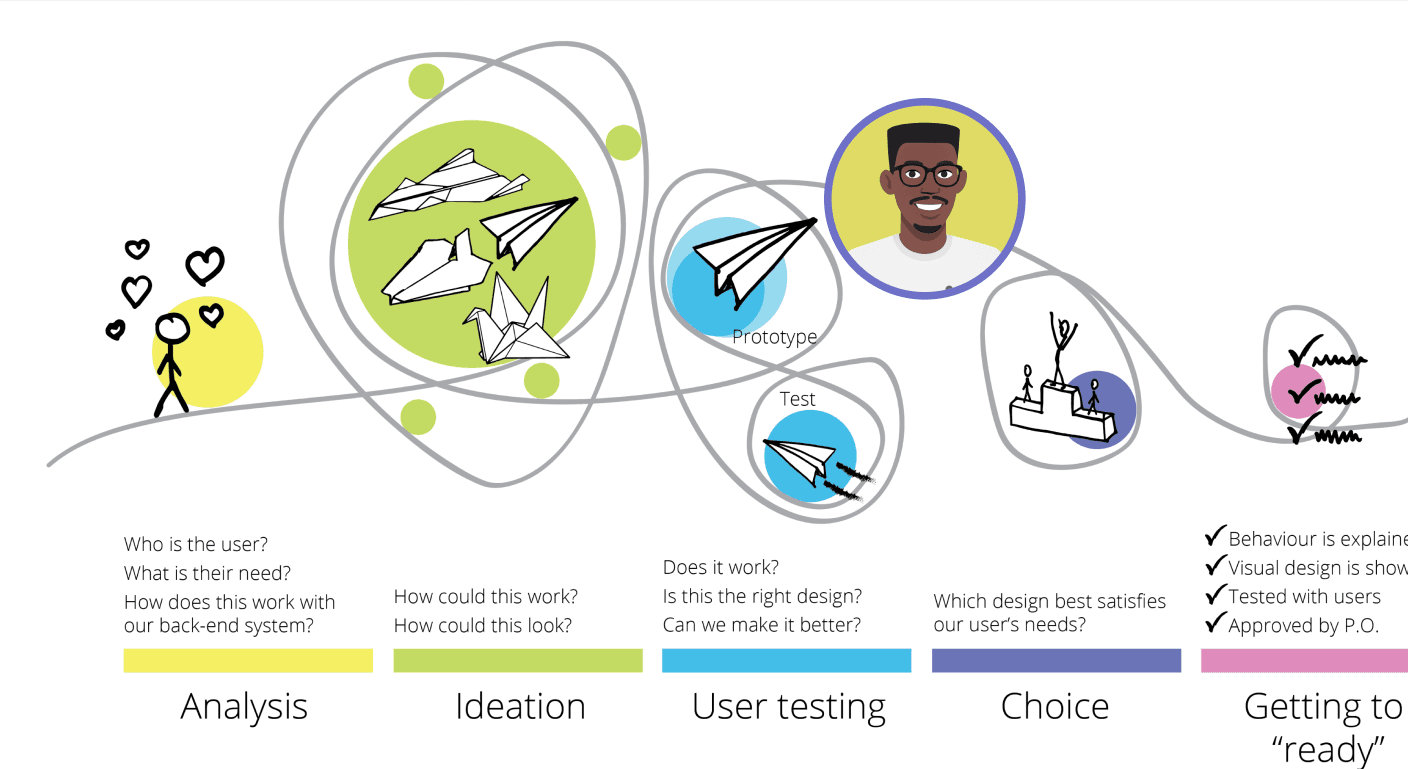
Clarity is the outcome, not the starting point.” - something I find myself repeating on almost every project kickoff.
Partnering with early-stage startups - many of which were navigating the uncertainty of pre-Product-Market Fit (where ambiguity is the norm and certainty is scarce).
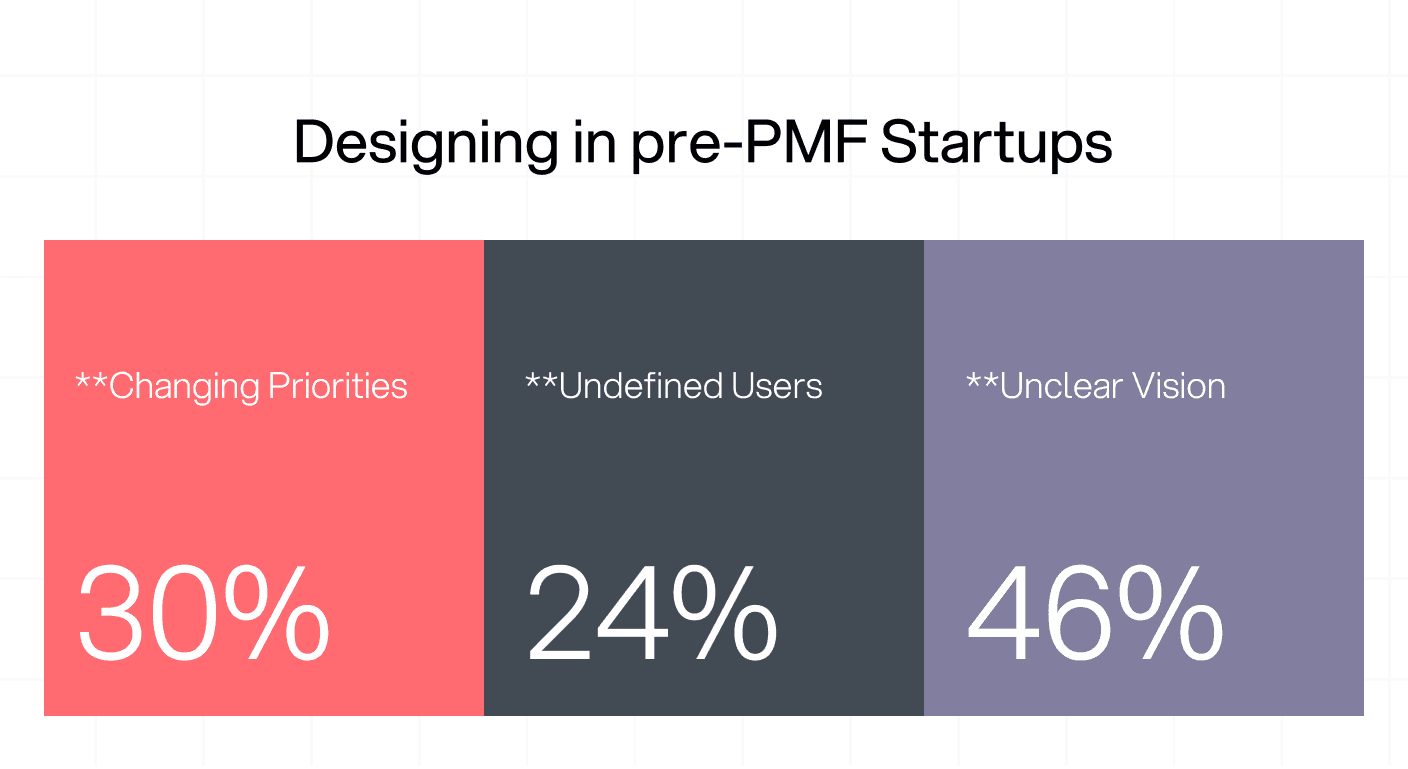
In a workshop I hosted at UXDesignAfrica, I asked felow designers: “What’s the hardest part of designing in pre-PMF startups?”
28 said “Changing priorities”, 22 said “Undefined users”, 35 said “Vague product vision”
Whatever the specifics, one thing is clear: ambiguity reigns in pre-PMF environments. But that doesn’t mean we can’t create clarity - in fact, that’s exactly our job.
So what is designing in ambiguity?
In the early days of a startup, you're often designing for a moving target. New features get greenlit over Slack DMs, product direction can pivot mid-week, and personas are based on assumptions, not data.
For me, designing in ambiguity means…
Designing in fast-moving environments where user needs, product direction, and success metrics constantly evolve - while still making clear, confident, and well-reasoned design decisions.
To navigate this, I rely on a few key mindsets and methods that help me bring clarity where there is none. Let’s break them down.
Four ways I create clarity in the fog of pre-PMF
Prototype to align early and often
Pre-PMF teams usually don't know exactly what they’re building - and that’s okay. The worst thing you can do is spend weeks polishing screens for a direction that isn’t solid.
So I prototype fast - paper, Figma, clickable flows - whatever lets us see the idea. As my old manager used to say:
“Prototypes are truth machines. They reveal what you really believe.”
When things are fuzzy, prototypes help teams make better decisions. They expose gaps, align thinking, and give stakeholders something tangible to react to. Think of them as the flashlight in the dark cave - not the map, but a way to find the path.

Zoom in, zoom out
In pre-PMF startups, you’re often asked to redesign a signup flow one day, and rethink the product strategy the next. It’s tempting to get stuck in the weeds - tweaking button styles or haggling over copy.
But I’ve found that switching between zoom levels is key.
Zoom out to understand how the product fits into users’ lives.
Zoom in to fine-tune the interactions that make that journey seamless.
One helpful tool here is the User Journey Map. I create these collaboratively, even if rough - so we can ground design decisions in a larger context.

Design with assumptions, but label them
At this stage, you won’t have all the data you want. That’s okay. I design with assumptions - but I make them visible.
When I present flows or wireframes, I call out things like:
“Assumption: users prefer this flow because it’s faster.”
“Hypothesis: users will value this feature enough to sign up.”
This makes it easier for product, engineers, and founders to discuss and prioritize which assumptions to test next. It turns vague thinking into something we can actually act on.
Know when to stop polishing
In pre-PMF, done is better than perfect. And shipping something testable is more valuable than shipping something flawless.
Don’t get me wrong - I care deeply about craft. But I’ve learned (the hard way) that you can’t polish your way out of uncertainty.
So I always ask:
“Is this polished enough to learn what we need to learn?”
If yes, ship it. Get feedback. Iterate. Ambiguity doesn’t mean chaos - it means learning fast is more important than getting it perfect the first time.

In Summary…
Pre-PMF startups are messy. But within that mess is where the magic happens, if you know how to find it.
To recap, here are four ways I bring UX clarity:
Prototype fast to align early
Zoom in and out to stay grounded
Label assumptions to spark better conversations
Prioritize learning over polish
These practices won’t eliminate ambiguity - but they’ll help you dance with it instead of fighting it.
Thanks for reading!
If you’re working on a scrappy 0-to-1 product, I’d love to know how you handle the fog.
PS: Thanks to Eric Bashir for reviewing this piece and sharing his early-stage war stories.